When coffee lovers look for distinctive, standout beans that are also widely popular, Robusta and Arabica are sure to top the list. These two coffee varieties are among the most widely grown, and each has its own distinctive aroma and flavor. But for many people who are new to coffee, it can be hard not to wonder what sets them apart. Today, we’ll introduce you to Robusta coffee and explain how it differs from Arabica.
Get to Know “Robusta Coffee”: How It Differs from Arabica and Became Popular Worldwide
Robusta is another popular coffee variety, accounting for 20% of the market. It ranks second to Arabica, which is hugely popular on the world market. Robusta was first discovered on the Indonesian island of Java, after Arabica had already been found. It was then cultivated as a replacement for Arabica, which had been devastated by coffee leaf rust.
One special feature of Robusta is that it can grow in low-lying areas, at elevations below 1,000 meters above sea level, and in humid climates. It also tolerates heat well. In Thailand, Robusta is grown most widely in the south, including the provinces of Ranong, Surat Thani, and Chumphon.
Robusta is generally grown with a focus on yield. When cultivated in favorable conditions, it produces a large crop quickly. This makes it better suited to instant coffee production than Arabica, which yields less and more slowly. Robusta also contains up to 2% more caffeine, and its pungent aroma and bold, bitter flavor make it a favorite among those who enjoy strong coffee.
The Differences Between Robusta and Arabica Coffee
Although both varieties are very popular with coffee lovers, they have clear differences. Here are some of the main ones:
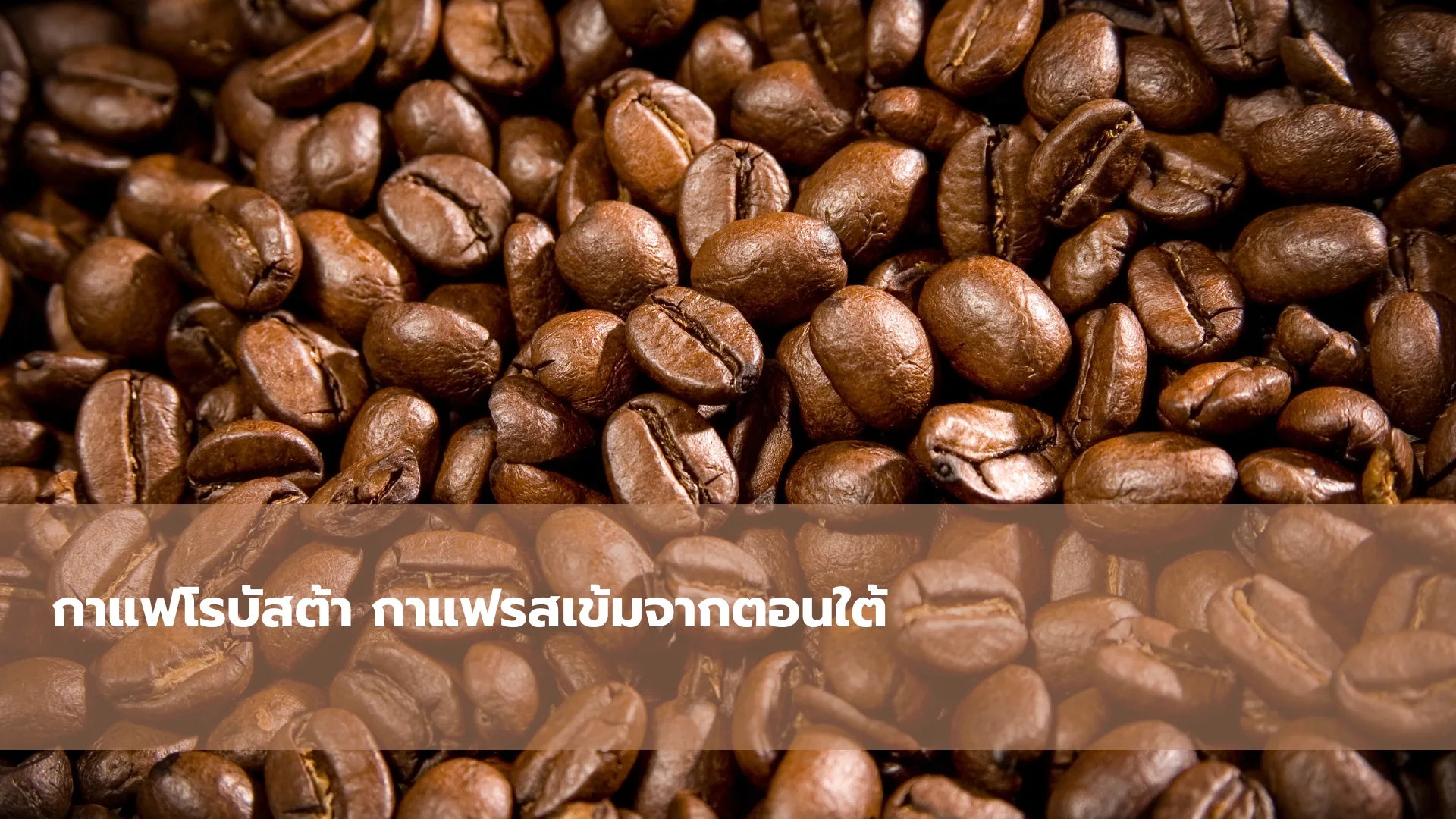
AppearanceRobusta coffee beans are round, with a straight line running down the center.
Arabica coffee beans are slender and elongated, with a curved center line that resembles the letter S.
FlavorRobusta has a bold, bitter, full-bodied flavor with a slight astringency. It’s well suited to making instant coffee.
Arabica has a slightly sweet flavor with fruity aromas and a smooth, mellow taste. It’s often used for drip coffee or brewed to bring out its flavor and make it easier to drink.
NutrientsRobusta has a relatively high caffeine content, but lower levels of acids and sugars. Arabica contains less caffeine than Robusta, but more acids and sugars, which give it a sweeter taste when brewed.
We hope this introduction has helped you learn more about Robusta coffee. If you’re still unsure how it differs from Arabica, compare their appearance, flavor, and nutritional content. In short, Robusta is easy to grow in low-lying areas and produces high yields, making it a popular choice for instant coffee. It also has the bold, satisfying flavor we enjoy in our cups today.