Any true coffee enthusiast is sure to know drip coffee well. There’s no denying that it has become popular again in recent years. Its inviting aroma, distinctive brewing method, rich flavor, and smooth mouthfeel make it easy for many first-time drinkers to become drip coffee fans. So what is the history of drip coffee, and what else is worth knowing about it? In this article, we’ll explore the answers.
The History of Drip Coffee, From Its Beginnings to Today
In 19th-century France, people began brewing coffee in a new way. They put ground coffee in a permeable container, poured water over it, and placed a vessel underneath to collect the coffee as it passed through. The resulting brew had an enticing aroma and a true coffee flavor. This method also required little equipment and took very little time, while producing a rich taste that appealed to coffee lovers of the era.
By 1908, coffee had entered a period of greater innovation. Amalie Auguste Melitta Bentz, a German woman with a deep passion for coffee, invented the coffee filter and patented it that year. Today, coffee filters make drip coffee brewing much easier and more convenient. And there’s plenty more to know about drip coffee:
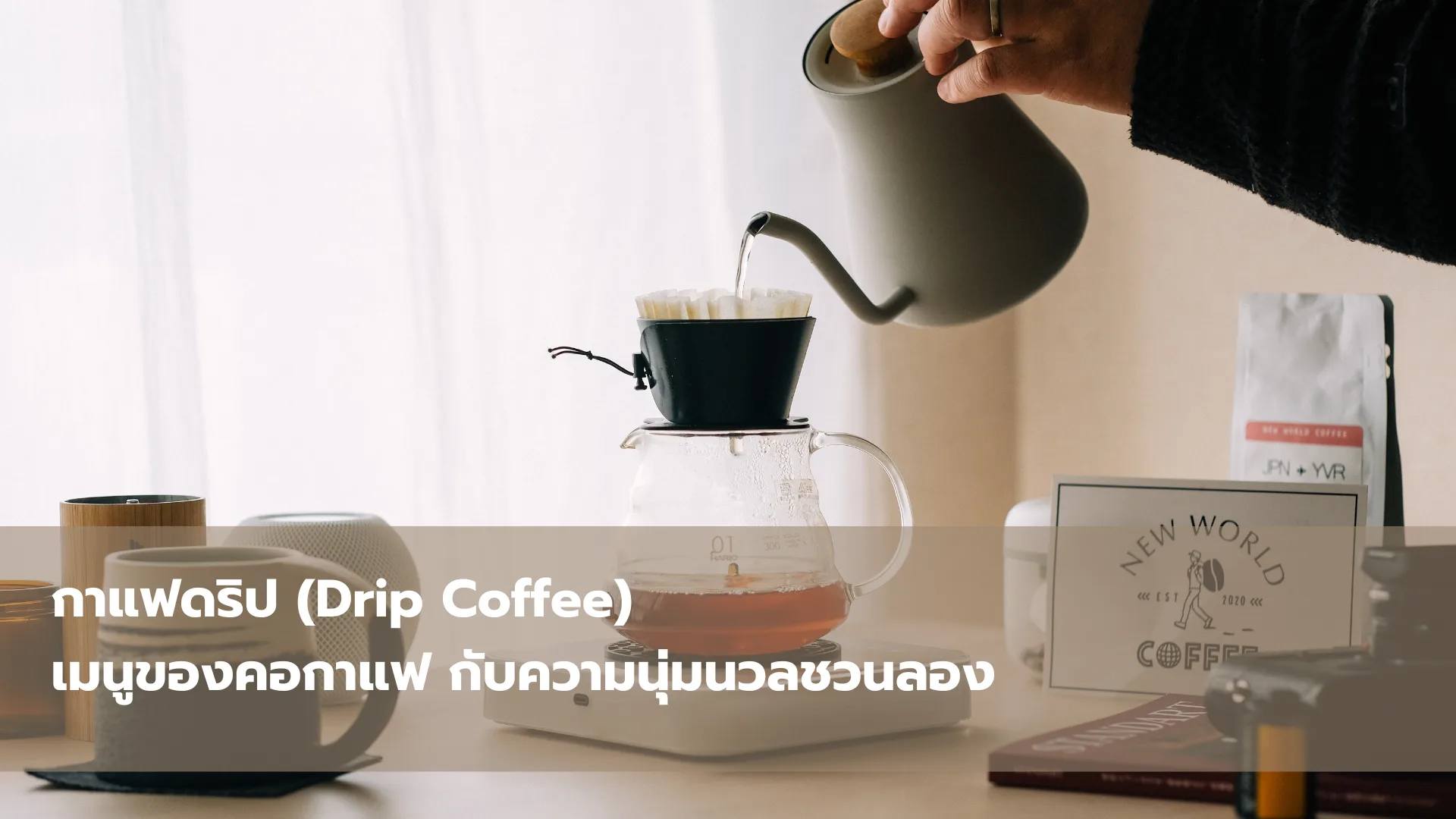
– Brewing MethodDrip coffee has its own specific brewing process, and learning the right technique is essential. One widely popular method is Pour Over, or Filter brewing, which calls for both technique and careful attention to the fundamentals. These include measuring the right amount, choosing a suitable filter, allowing enough time, and taking care throughout the brewing process.
– Key Factors That Affect Your CoffeeThere are 3 key factors that affect the coffee in your cup:
- Coffee Grind Size
The finer you grind the coffee, the more coffee can be extracted, affecting both its flavor and aroma.
- Contact Time
Contact time refers to how quickly water flows through the coffee, as well as how quickly you pour it over the grounds. You can extend the brewing time by pouring more slowly, which increases the amount of coffee extracted.
- Amount of Coffee
An easy rule to remember when making drip coffee is that the more coffee you use, the longer the water takes to flow through it, increasing the contact time as well.
– Pouring KettleFor drip coffee, choose a kettle with a narrow spout so you can control the water flow and pour faster or slower. It also helps the water flow steadily and slowly. As mentioned earlier, pouring more slowly increases the amount of coffee extracted, making this type of kettle ideal for drip coffee.
– The BloomThe bloom is at the heart of drip coffee. It involves a scientific principle: carbon dioxide is released as water is poured over the coffee, causing the grounds to swell. They look a little like dough when hot water is first poured over them. While research on this process is not yet conclusive, the bloom may help make coffee extraction easier.
– Types of FiltersThere are 2 types of filters used for drip coffee:
- Paper
This is the most popular type of filter. It produces a clean-tasting cup that brings out the character of drip coffee, and it also filters out most of the oils.
- Cloth
This is another popular filter option. However, cloth filters allow oils to pass into the coffee during brewing and require more careful cleaning than paper filters.
Taken together, these points are essential to making drip coffee and all affect the coffee in your cup. Of course, a great-tasting cup depends on more than the brewing method. Choosing quality ingredients that work well for brewing matters too. These are what bring out the aroma, flavor, and mouthfeel that coffee lovers truly want from drip coffee.