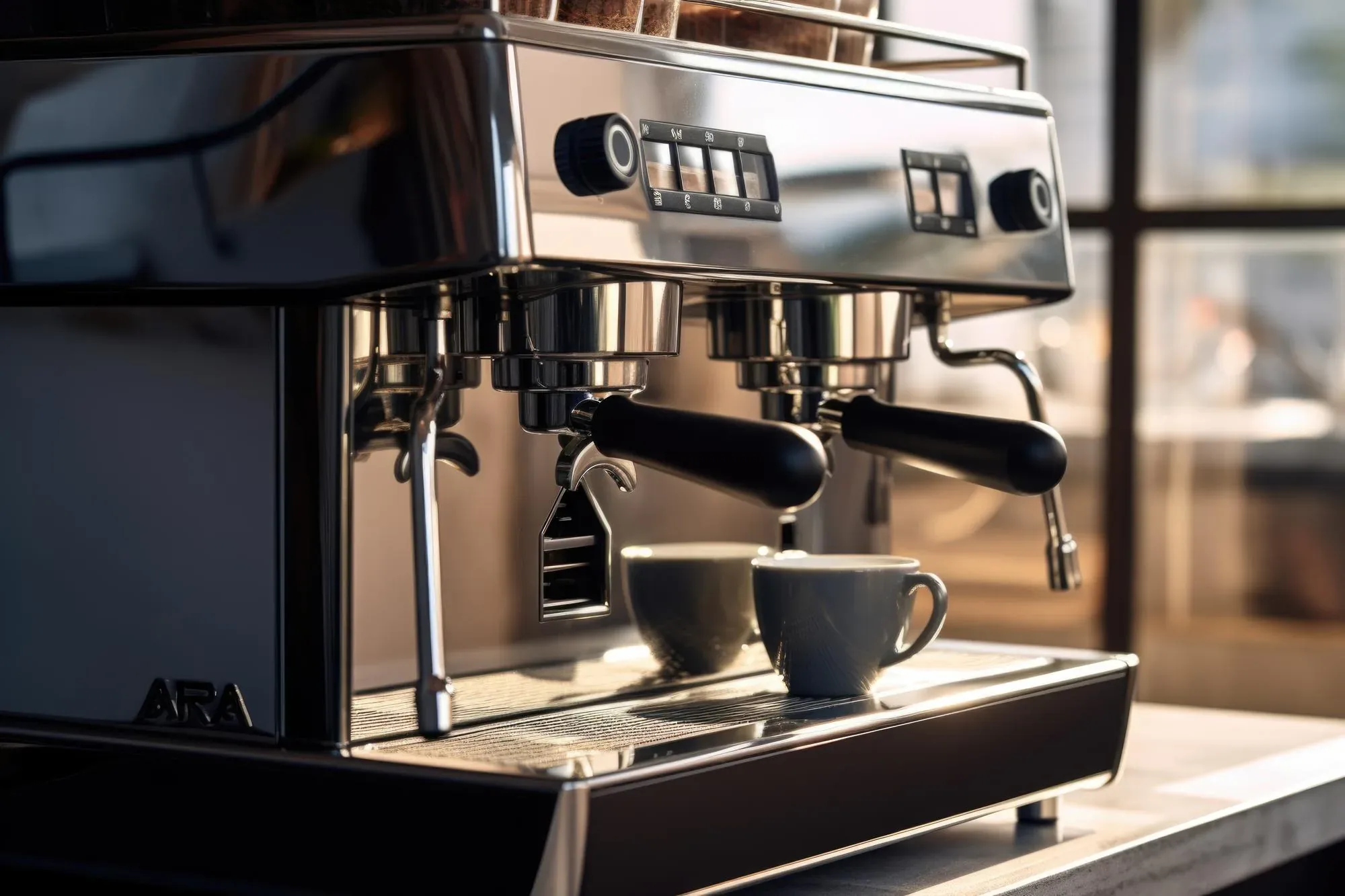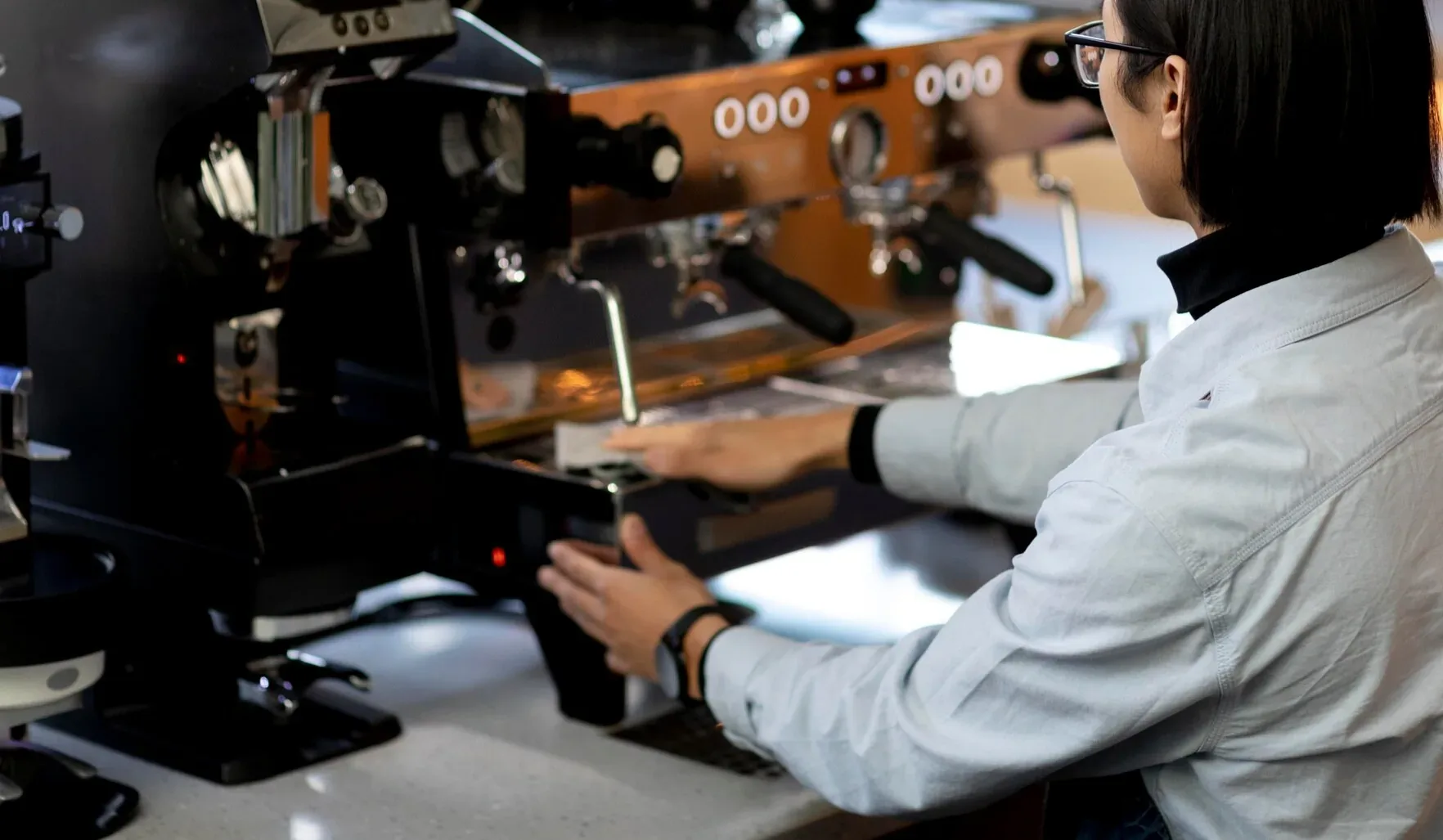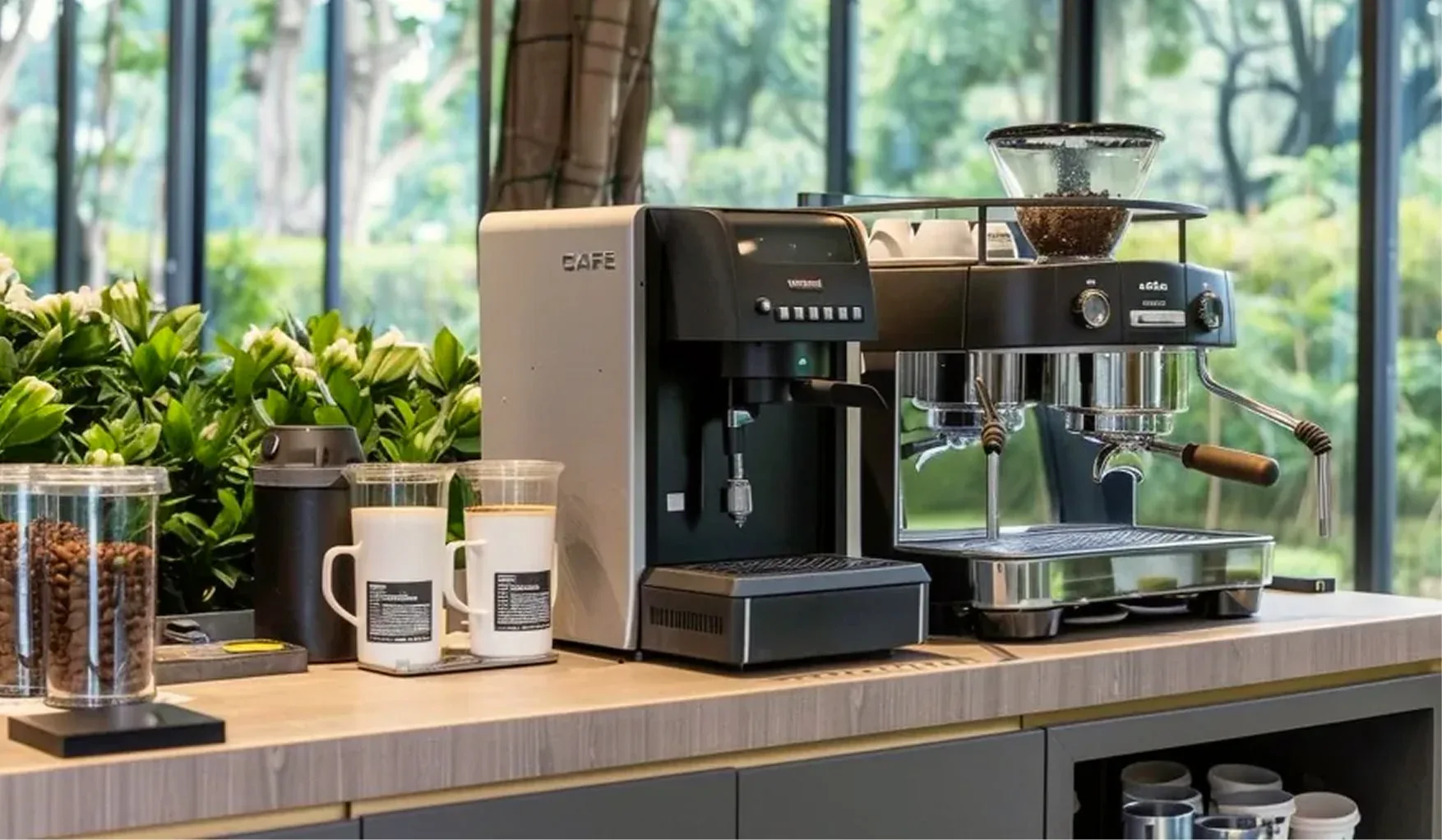
Commercial coffee machines work with hot water, high pressure, and coffee oils all day long. If residue is left to build up, coffee can start tasting bitter and astringent, and the machine may break down sooner than it should. This article covers the cleaning schedule businesses should follow, organized by frequency.
Why cleaning matters more than you think
Coffee oils build up in the group head, screens, and water lines. As they accumulate, they create stale odors and a bitter aftertaste. The buildup happens gradually, so café staff often don’t notice that the taste has changed.
There’s also the cost. Residue and scale make the heating system work harder, use more electricity, and are among the leading causes of service calls that could have been prevented.
Daily checklist: do this after closing
Backflush the group head with plain water after closing every day, and use cleaning powder according to the manufacturer’s schedule.
Remove the group head screen and portafilter and soak them in hot water with cleaning powder to dissolve coffee oils that aren’t visible to the naked eye.
Wipe the steam wand immediately after every use and purge it to clear any milk left in the tube. Dried milk can cause blockages and become a breeding ground for bacteria.
Empty the grounds and clean the drip tray to prevent odors and insects.
Brush the grinder clean because coffee grounds left in the hopper will go stale and affect the taste of the next day’s coffee.
Weekly
Soak the portafilter and screen with cleaning powder for a full cleaning cycle.
Remove the grinder’s bean hopper, wash it, and dry it thoroughly. Moisture is the enemy of coffee beans.
Check the group head gasket. If it’s starting to harden or water leaks during brewing, it’s nearly time to replace it.
Wipe down the outside of the machine and the often-forgotten area underneath it.
Monthly and quarterly
Deep clean the system by cleaning the entire water circuit, not just the visible parts.
Check the water filter and replace it according to actual usage, not guesswork.
Check pump pressure and temperature to make sure they’re within the correct range. Small deviations can be an early warning sign.
Check the grinder burrs for sharpness. Worn burrs produce uneven grounds, and adjusting the recipe alone won’t fix the problem.
Common mistakes we see on-site
Using dish soap instead of cleaner made specifically for coffee machines, which can leave odors and damage internal components.
Cleaning only when the coffee starts tasting off, which is often too late.
Frequently changing who’s responsible for cleaning without keeping a checklist on-site, so standards leave with departing staff.
Neglecting water quality, even though water makes up more than 90 percent of what’s in the cup.
Have a technician help with scheduled maintenance
Front-of-house staff can handle daily cleaning, but deep cleaning, pressure checks, and replacing worn parts should be left to a qualified technician to prevent the machine from breaking down during business hours.
Arabigo has dedicated service teams in Bangkok, Chonburi, Phuket, and Chiang Mai, maintaining coffee machines for Thai businesses for more than 30 years.
Arabigo’s team of experts is ready to offer free, no-obligation advice on coffee systems for your business.
Call 098-262-6642, email sale@arabigo.co.th, LINE @arabigo